
ServiceAdvanced fault finding
FOLLOW
THE EVIDENCE.
For recurring, intermittent or difficult faults where the cause is not clear. We take a methodical approach to understanding the equipment, gathering the right information and narrowing down what is contributing to the problem.
What we help with
- Control system faults
- Motors and drives
- Intermittent machine issues
- Power quality problems
- Instrumentation and transmitter issues
- Pumps, compressors and processing equipment
- Persistent and recurring faults
- Electrical faults requiring specialised testing or longer-term monitoring
Common reasons we’re brought in
- A fault happens intermittently and cannot be reproduced on demand
- Equipment only faults under particular operating conditions
- Previous repairs have not resolved the problem
- An electrical issue needs measurement or monitoring beyond normal testing
How we approach the work
Understand the equipment
We start by understanding the machine or system, how it works and what it is expected to do. Drawings, manuals and information from the people who work with the equipment all help build that picture.
Build a picture of the fault
We look at when the problem occurs, the conditions around it, previous repairs and any useful alarm history. This helps narrow down where to start investigating.
Start with the simplest checks
We start with the quickest checks that can narrow the problem. Depending on the fault, this may include visual inspection, alarm logs, voltage and current measurements, insulation resistance, thermal imaging or instrumentation measurements.
Go further when needed
If the problem remains unexplained or needs to be captured over time, we can move to more specialised testing and data logging. The method depends on the fault and the information gathered along the way.
TECHNICAL CAPABILITY
Additional capability when the investigation needs it
When normal testing does not explain the problem, we can bring additional measurement, controls and engineering capability into the investigation.
Related work
All projects ↗︎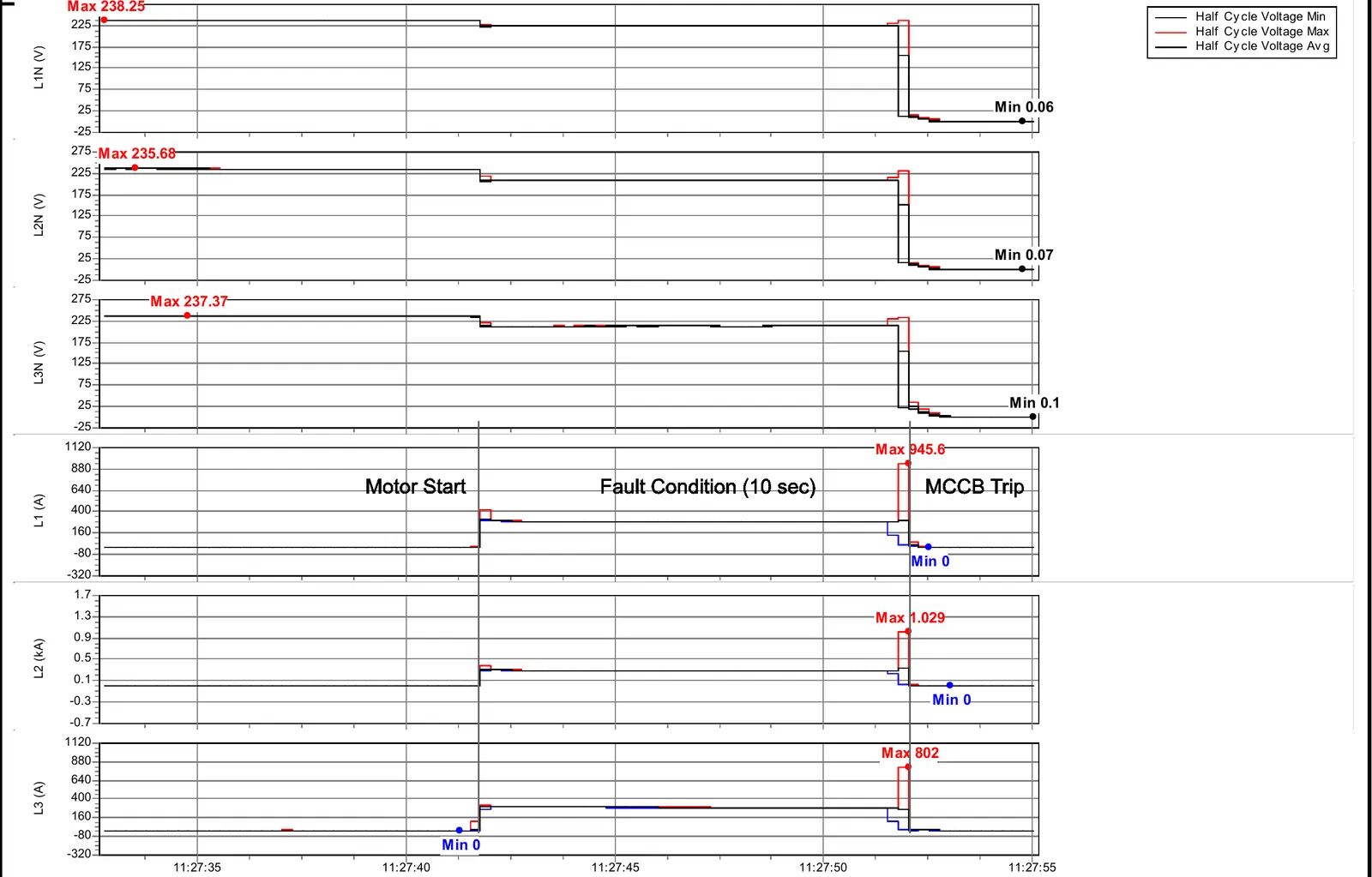
75 kW compressor fault investigation
What we didCaptured the intermittent fault during motor startup and compared it with normal starting conditions.
How it helpedCapturing the fault provided evidence that was unavailable during the initial inspection.
Read the project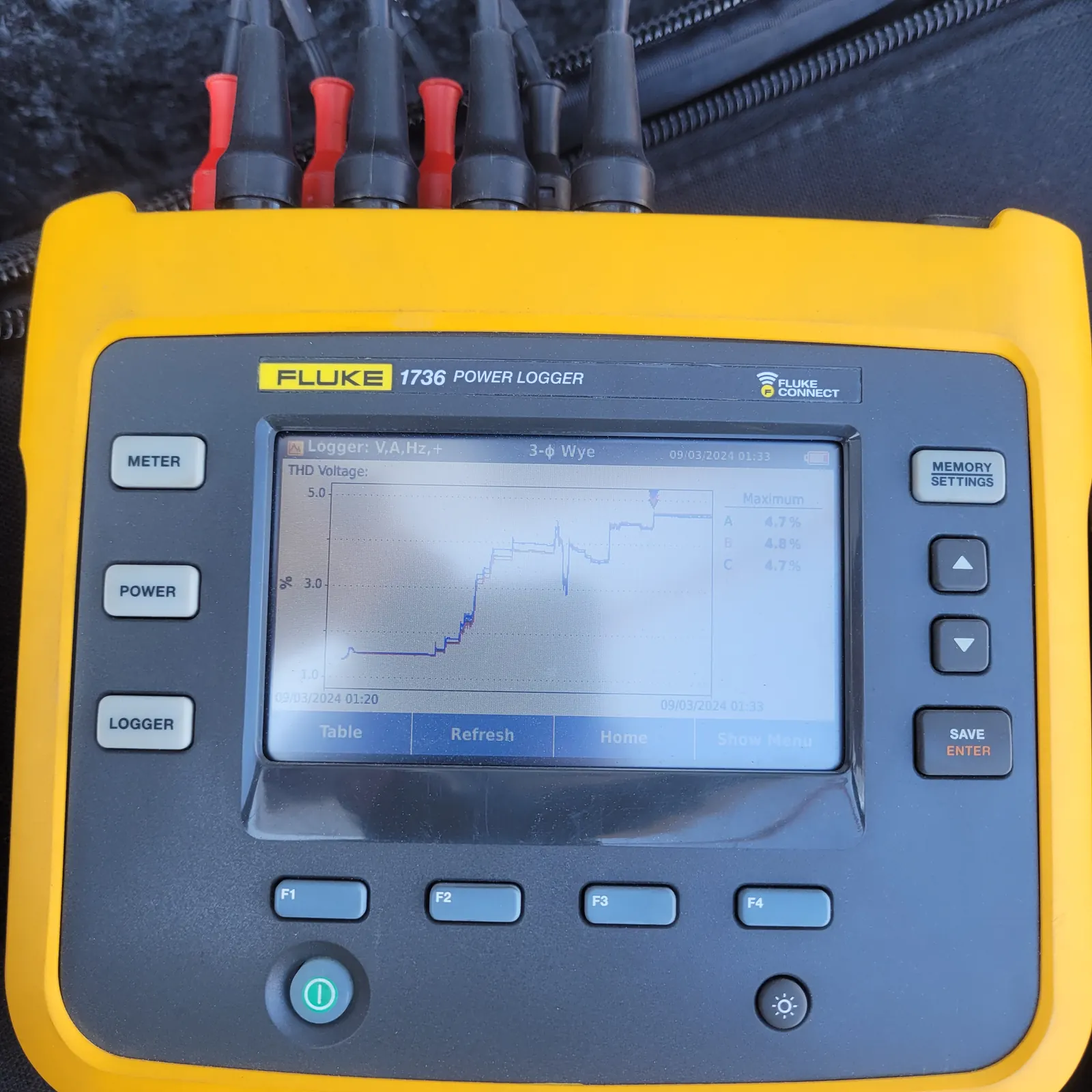
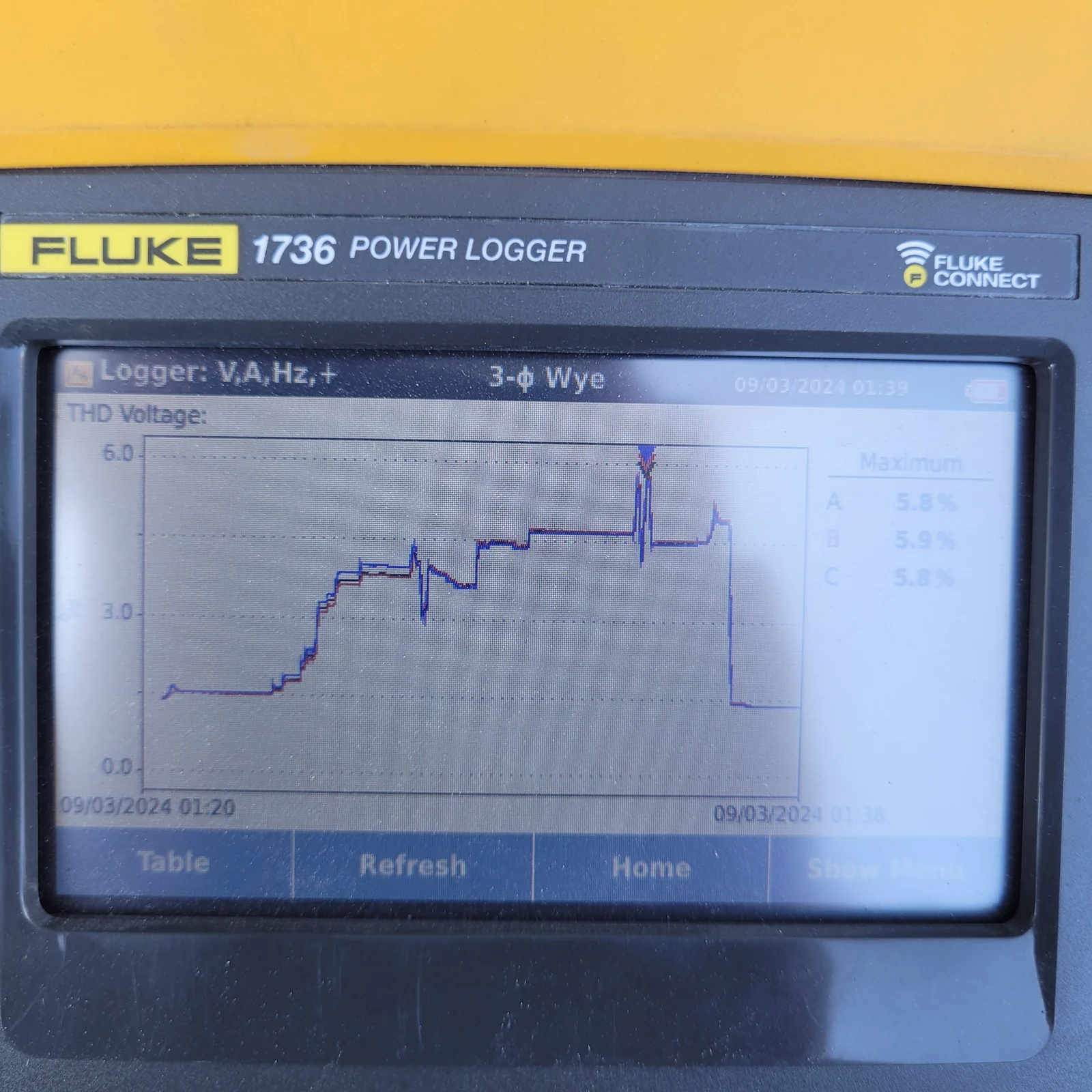
Generator harmonic distortion investigation
What we didAnalysed harmonic distortion within the generator-connected electrical system.
How it helpedWhile the cause of the intermittent generator fault was not pinpointed, the investigation confirmed that harmonic distortion was within acceptable limits.
Read the projectFindings and next steps
- What the investigation has established
- Relevant measurements or recorded information where useful
- Recommended next steps where further testing, repair or specialist input is required
Worth knowing
Intermittent faults do not always show themselves during the first investigation. If the evidence is not conclusive, we explain what we have found, the likely areas still to investigate and what we recommend doing next.
The priority is to leave you with useful information.
Where the issue crosses into mechanical, hydraulic or manufacturer-specific equipment, we work with the relevant people rather than treating every problem as electrical.
Questions people ask
Someone has already looked at it. Is another investigation worthwhile?
It can be. We start with what is already known and what has previously been tried rather than assuming the investigation needs to start again.
Does the equipment need to be stopped?
Not always. Some faults are best investigated while the equipment is operating normally, while other testing requires it to be stopped. It depends on the fault and what can be done safely.
What if the fault does not happen while you’re onsite?
We can still investigate the available information and narrow down the likely causes. Where needed, longer-term logging or monitoring can be used to capture what happens when the fault occurs.
What information is useful before you attend?
A rough description of the equipment and fault is a good starting point. Let us know whether the equipment is still operating, how often the fault occurs and whether there are restrictions on when it can be stopped.
Related articles
All articles ↗︎Related services
Other services in Industrial support.
Industrial maintenance
Electrical repairs, modifications and new equipment, with site history built up over time.
02Automation & control
Onsite support for PLC, HMI, drive and control systems, and control panels for new equipment.
03Breakdown support
Fault finding and repairs to get failed equipment back into operation.
Tell us what is happening.
Tell us what equipment is involved, what the fault looks like and whether the equipment is currently operating. Information about when the fault occurs and any restrictions on when the equipment can be stopped can also help us understand the situation before coming to site.
Prefer to talk? 1300 886 613