
ServiceSolar & battery
MAKE IT.
KEEP IT.
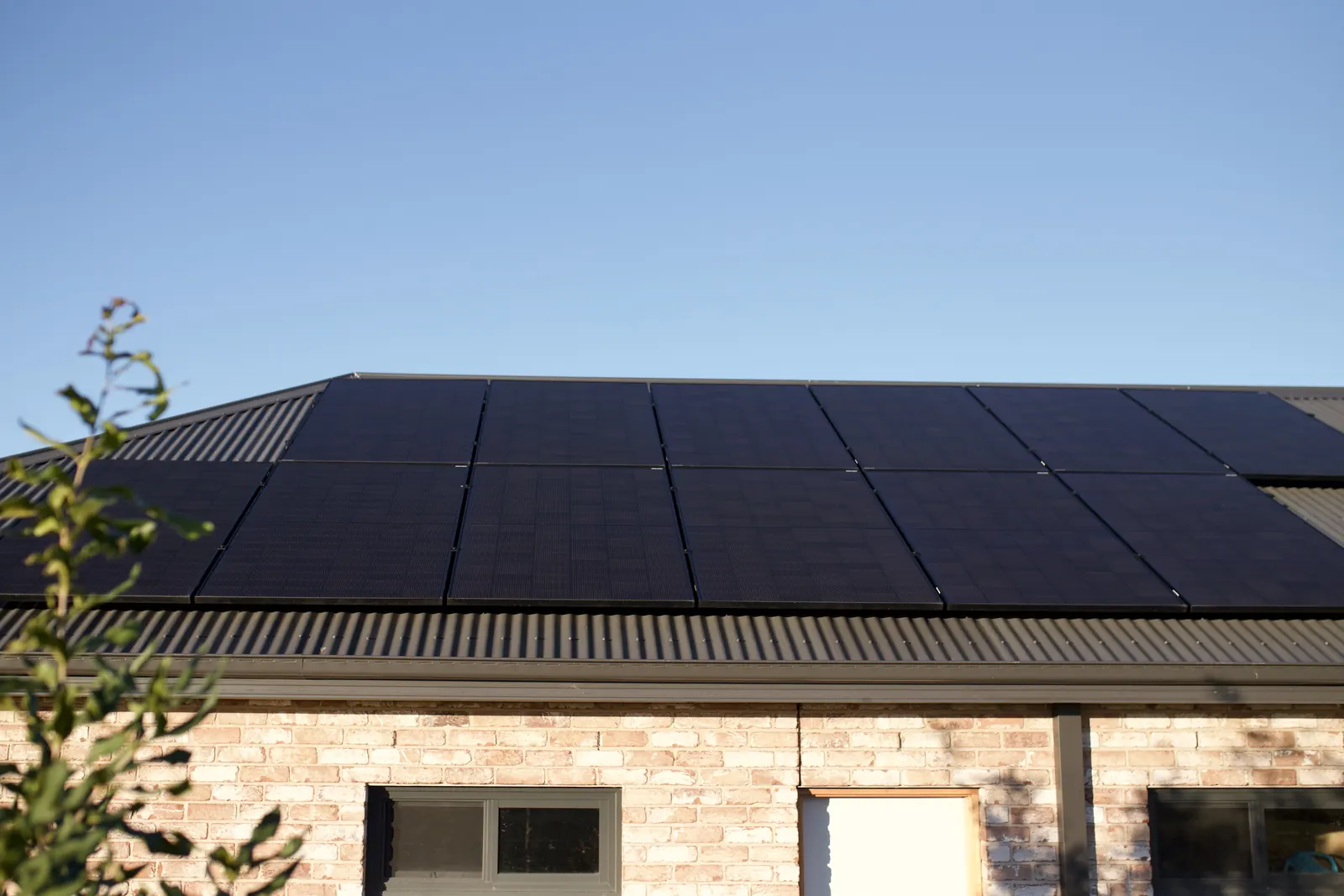
Solar and batteries for homes and businesses across Newcastle, Maitland and the Hunter, designed as one system around how the property uses power. We check the supply, switchboard and roof first, work out what needs to keep running in an outage, and plan where everything goes. Australian-made Tindo panels where they suit the job and the budget.
- Who it’s for
- Homeowners, builders & businesses
- Covers
- Solar, batteries, backup & monitoring
- You get
- A system design and quote
- Then
- Room for an EV charger or more storage later
Worth knowing
Before you choose a system
Backup depends on the equipment.
Solar on its own switches off when the grid goes down. To keep power on in an outage, you need a battery and an inverter that both support backup, and each manufacturer handles it differently. Backup can then cover a few circuits, like lights, the fridge and some power points, or the whole property. That comes down to the equipment and how it’s designed and installed.
Size it on how you use power, not on the roof.
Your power bills show how much you use and when. Power you use during the day comes straight from the panels. Power you use at night comes from the battery or the grid. If you’re planning a pool, an electric car or moving off gas, your usage could go up a lot, so it’s worth allowing for that now. Extra inverter capacity or switchboard space is much easier to plan in than to add later.
Is a battery worth it?
A battery stores spare solar during the day, which would otherwise go to the grid for a small credit, and uses it in the evening when you’d be buying power. It usually makes the most sense if you export a lot of solar, use most of your power in the evening, are on a tariff with high peak rates, or want backup in an outage. If you’re home during the day and already use most of your solar, a battery saves less.
How it works
How a solar and battery system runs
Tap an option to see how power moves.
- Power moving
- Two-way
- Off
Normal operation
Sun out, grid on
The panels and battery connect to the inverter, and the inverter connects to your switchboard.
During the day, the solar runs the house first. Spare power charges the battery, and anything left over goes to the grid.
Not enough solar
Evenings and cloudy days
When the panels can’t keep up, at night, on a cloudy day or when the house is using a lot, the battery makes up the difference. Everything keeps running as normal.
When the battery runs low, the grid takes over. Most systems can keep some charge in reserve for an outage.
Grid off
Backup mode
When the grid goes down, the inverter disconnects from it and keeps the backed-up circuits running from the battery.
With the right equipment, the panels keep charging the battery during the day.
Everything else stays off until the grid comes back. Backed-up circuits can be a few or the whole property, depending on the equipment and how it’s designed and installed.
What we do
How we help
- Solar and battery design and installation, for homes and businesses
- Australian-made Tindo panels and Clenergy rail where they suit the job
- Review of your bills and usage
- Choosing which circuits are backed up
- Checking the supply and switchboard
- Panel layout, shading and how it looks on the roof
- Battery location, clearances and service access
- Room for an EV charger or more storage later
- Monitoring app set-up, testing and commissioning
The process
How a solar and battery job works
- 1
Energy use and goals.
Send through a recent power bill or your usage data, and tell us what you’re after: lower bills, backup, an EV down the track.
- 2
Initial guide and estimate.
From your usage, we give you a rough idea of the system size and cost.
You getA guide on system size and an estimate
- 3
Site visit, if needed.
We look at the roof, the supply and switchboard, and where the battery could go.
- 4
System design and quote.
Panel layout, inverter and battery, the backed-up circuits and any switchboard work, priced up.
You getSystem design and quote
Then
- 5
Installation.
Usually takes 1 to 2 days, depending on the size and how complex the job is.
- 6
Handover.
We set up the monitoring app and run you through how it all works.
Support.
OngoingWe keep an eye on the system for the first few months. After that, we’re a call away if something doesn’t look right.
Explore
More projects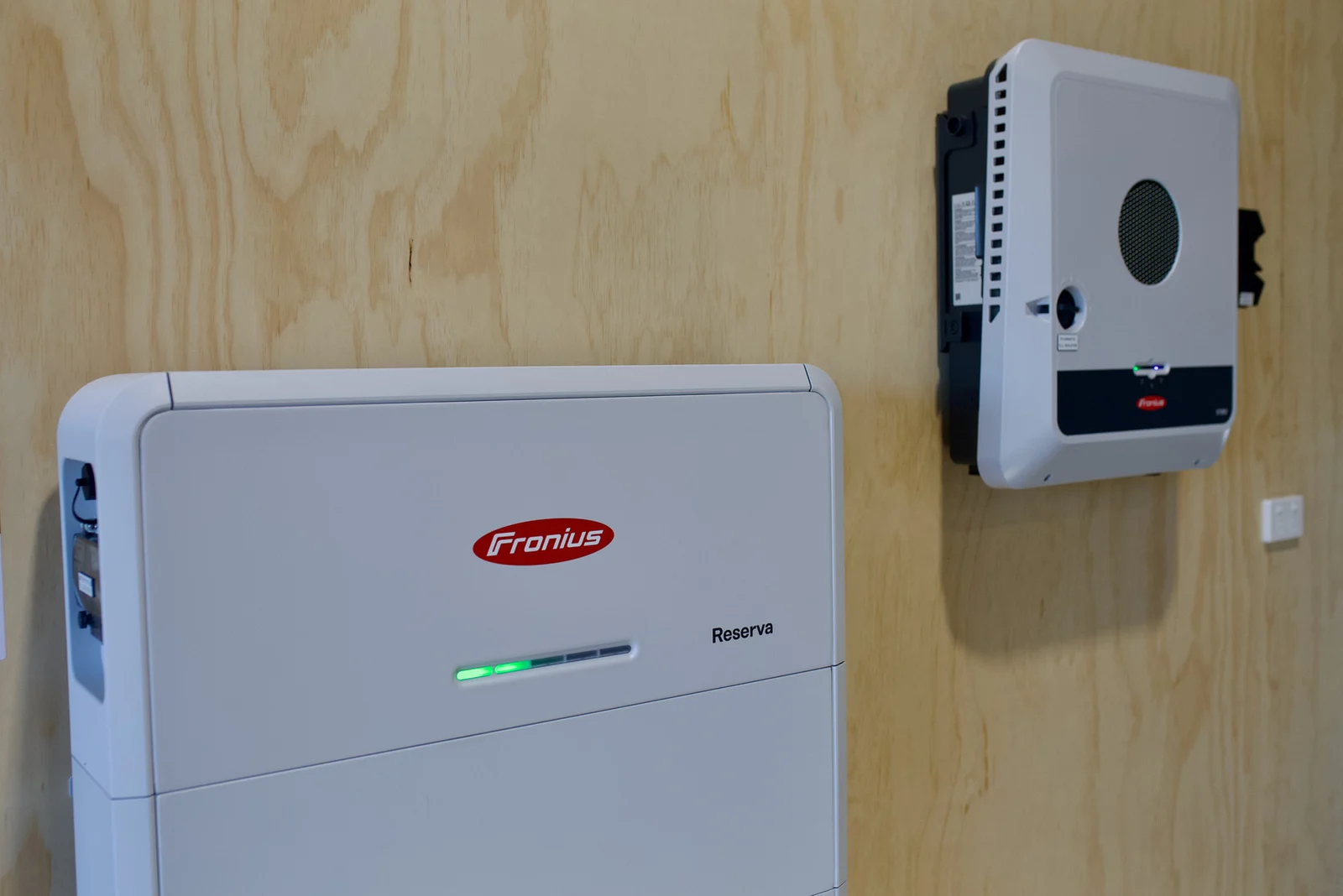
FAQs
Questions people ask
What size solar system do I need?
It depends on how much power you use, when you use it, your roof space and your plans, such as an EV or a pool. We look at your bills and usage first, then size the system from there.
Is a home battery worth it?
It depends on your goals. We’ll explain what a battery would actually do for your household before you decide.
Will solar run the house in a blackout?
Not on its own. You need a battery and inverter that support backup.
Can a battery run the air conditioner in a blackout?
It depends on the battery and the circuits chosen for backup. Air con shortens how long the battery lasts, so we work out with you what’s worth keeping on.
Do you use Australian-made equipment?
Yes, where it suits the job and budget. We use Tindo panels and Clenergy rail, and all equipment is CEC-approved.
Do you install commercial solar?
Yes. Businesses with large daytime loads are often well suited to solar, because they use most of what the system makes.
Other services
- EV chargersCharger selection and installation to suit the vehicle, the property and the daily routine.
- Repairs & upgradesTesting and data analysis to find out why a system is underperforming, then practical changes to improve it.
- Off-grid power systemsOff-grid power systems designed and installed across Newcastle, Maitland and the Hunter.
Tell us about the property.
Send through a few details and a recent power bill if you have one. We’ll get in touch to talk it through.
Prefer to talk? 1300 886 613